
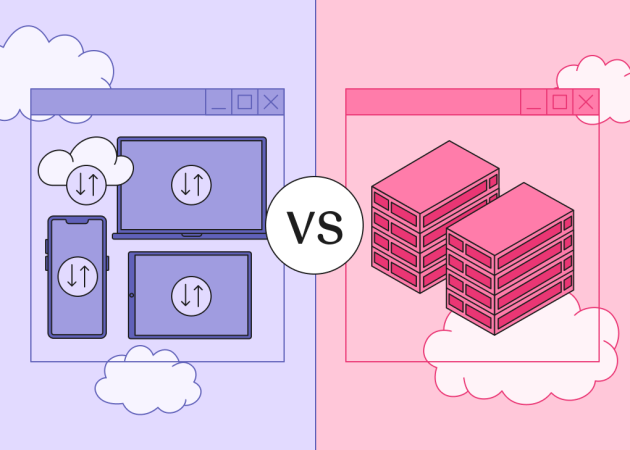
The digital infrastructure landscape has shifted dramatically over the last twelve months. As we settle into 2025, the debate between serverless computing and containerization has moved beyond simple technical preferences into the realm of strategic business survival. Enterprise architects, CTOs, and Platform Engineering leads are no longer just choosing a deployment target. They are selecting a financial model, a security posture, and a velocity limit for their organizations.
- The Cloud Architecture Landscape in 2025
- Deep Dive into Serverless Architecture
- The Evolution of FaaS and Event Driven Architecture
- Top Use Cases for Serverless in 2025
- The Economic Advantage of Serverless
- Deep Dive into Containerization and Kubernetes
- The Maturity of Kubernetes and Platform Engineering
- Top Use Cases for Containers in 2025
- The Economic Advantage of Containers
- Serverless vs. Containers: The Critical Comparison Vectors
- 1. Cost Efficiency and FinOps
- 2. Operational Complexity (NoOps vs. DevOps)
- 3. Performance and Latency
- 4. Vendor Lock in and Portability
- 5. Security and Compliance
- The Rise of Serverless Containers
- Architecting for AI and LLMs
- Migration Strategy: From Monolith to Cloud Native
- Conclusion: The Strategic Decision Matrix
- Sources
The cloud computing market in 2025 is defined by three massive pressures: the relentless rise of Artificial Intelligence workloads, the strict mandate of FinOps (financial operations) to control spiraling cloud costs, and the increasing complexity of cybersecurity compliance. Whether you are migrating legacy monoliths or building greenfield Generative AI applications, the choice between serverless and containers is the foundational decision that will dictate your success.
This comprehensive guide explores the nuances of these architectures in the current year. We will dissect the cost implications, performance metrics, and operational realities that separate high performing engineering teams from those bogged down by infrastructure debt.
The Cloud Architecture Landscape in 2025
The binary choice of “Serverless OR Containers” is largely a false dichotomy in modern enterprise strategy. The reality for 2025 is convergence. We are seeing a massive uptake in hybrid patterns where event driven serverless functions trigger containerized heavy lifters. However, understanding the distinct strengths of each is critical for workload placement.
Cloud providers like AWS, Microsoft Azure, and Google Cloud Platform (GCP) have matured their offerings significantly. Serverless is no longer just for simple APIs; it is handling complex orchestration. Kubernetes has evolved from a beast that required a team of ten to manage into a commoditized utility often hidden behind managed services.
The driving force this year is efficiency. With interest rates stabilizing but capital remaining expensive, CFOs are scrutinizing cloud bills. This has given rise to “GreenOps” and “FinOps” as primary architectural drivers. An architecture that scales to zero is attractive, but an architecture that scales efficiently at high volume is equally critical.
Deep Dive into Serverless Architecture
Serverless computing, typified by Function as a Service (FaaS), has entered its golden era of maturity. In 2025, we have moved past the initial hurdles of “cold starts” and limited execution times.
The Evolution of FaaS and Event Driven Architecture
Serverless is the epitome of the “focus on code, not infrastructure” philosophy. In 2025, the ecosystem has expanded. We are seeing a shift toward “Stateful Serverless” and better handling of long running processes. The primary value proposition remains the same: you pay only for the compute you use, down to the millisecond.
The event driven architecture (EDA) model is the backbone of modern serverless. Systems are designed to react to changes in state. A user uploads a file, a database entry changes, or an IoT sensor reports data. These events trigger ephemeral compute instances that process the logic and disappear.
Top Use Cases for Serverless in 2025
1. Burst Traffic Applications: For workloads with unpredictable spikes, such as ticket sales or flash marketing campaigns, serverless is unbeatable. The elasticity is instantaneous and handled entirely by the provider.
2. Real Time Data Processing: Streaming data from IoT devices or financial tickers fits the serverless model perfectly. Tools like AWS Kinesis or Azure Event Grid integrate natively with functions to process data in near real time.
3. IT Automation and Glue Code: Ops teams use serverless to automate security patches, database backups, and infrastructure auditing. It is the cost effective glue that holds the cloud environment together.
4. GenAI RAG Pipelines: Retrieval Augmented Generation (RAG) for LLMs often uses serverless to fetch context, process vector embeddings, and send prompts to models.
The Economic Advantage of Serverless
The financial model of serverless is OpEx (Operational Expenditure) optimized. There is zero cost for idle time. For startups and internal enterprise tools that are used sporadically, this can result in 90% cost savings compared to provisioned infrastructure. However, the unit cost of compute in serverless is higher than reserved instances. This creates a “break even” point where high consistent throughput becomes more expensive on serverless than containers.
Deep Dive into Containerization and Kubernetes
Containers have become the standard unit of software delivery. Docker provided the format, but Kubernetes (K8s) won the orchestration war. In 2025, Kubernetes is the operating system of the cloud.
The Maturity of Kubernetes and Platform Engineering
The complexity of Kubernetes was once its biggest detractor. Today, the rise of Platform Engineering has abstracted much of this difficulty. Internal Developer Platforms (IDPs) allow developers to deploy to Kubernetes without ever writing a YAML file.
Managed services like Amazon EKS, Azure AKS, and Google GKE have added features that automate node provisioning and security patching. The ecosystem is vast, supported by the Cloud Native Computing Foundation (CNCF), offering tools for service mesh, observability, and secret management.
Top Use Cases for Containers in 2025
1. Long Running Microservices: For core banking systems, e-commerce backends, and legacy applications that require persistent connections, containers provide the necessary stability and control.
2. AI Model Training and Heavy Inference: Training Large Language Models (LLMs) requires massive, sustained compute power, often leveraging GPUs. Containers offer the granular access to hardware resources that serverless cannot yet match.
3. Multi Cloud and Hybrid Cloud Strategies: Containers provide true portability. An application packaged in a container can run on AWS, on premise data centers, or at the edge with minimal changes. This is vital for regulated industries.
4. Legacy Application Modernization: The “Lift and Shift” strategy often moves monolithic applications into containers as a first step toward modernization, allowing them to run on modern infrastructure without a complete rewrite.
The Economic Advantage of Containers
Containers reward predictability. By reserving instances (Savings Plans) and packing multiple containers onto a single node (bin packing), enterprises can drive the cost of compute down significantly. For workloads that run 24/7, containers are almost always more cost effective than serverless functions.
Serverless vs. Containers: The Critical Comparison Vectors
To choose the right architecture, we must analyze them across specific dimensions that impact business value and operational risk.
1. Cost Efficiency and FinOps
The most contentious battleground is cost.
- Serverless: Low barrier to entry. Excellent for startups and variable workloads. Risk of “bill shock” if a function enters an infinite loop or traffic spikes unexpectedly without budget caps.
- Containers: Higher initial overhead. Requires payment for the underlying EC2/VM instances even if they are idle (unless using a node autolimiter). However, at scale, the cost per request is significantly lower.Verdict: Use Serverless for volatility. Use Containers for consistency.
2. Operational Complexity (NoOps vs. DevOps)
- Serverless: Often called “NoOps,” though this is a misnomer. It reduces infrastructure management but increases application architecture complexity (distributed tracing is hard). The vendor manages the OS and patching.
- Containers: Requires a robust DevOps culture. You are responsible for the container security, the orchestration layer configuration, and often the underlying node maintenance.Verdict: Serverless reduces operational burden for small teams. Containers require dedicated platform engineers.
3. Performance and Latency
- Serverless: Cold starts (the time it takes to spin up a new environment) are largely mitigated in 2025 but still exist. For ultra low latency trading or real time gaming, these milliseconds matter.
- Containers: Once running, containers offer consistent, sub millisecond performance. They maintain state and connections, eliminating the initialization penalty.Verdict: Containers win on pure, consistent performance.
4. Vendor Lock in and Portability
- Serverless: High lock in. Moving a complex system from AWS Lambda to Azure Functions requires rewriting code and reconfiguring event triggers. You are bound to the provider’s ecosystem.
- Containers: Low lock in. Kubernetes is open source and standardized. You can move a container cluster from one cloud to another with relative ease.Verdict: Containers are the clear winner for portability.
5. Security and Compliance
- Serverless: The “Shared Responsibility Model” shifts more security burden to the provider. They secure the OS and runtime. You secure the code and permissions. This is great for teams lacking security depth.
- Containers: You own the full stack security, from the base image to the network policies. This allows for “Zero Trust” architectures and strict compliance with standards like PCI-DSS and HIPAA, but it requires expertise.Verdict: Serverless for ease of security; Containers for granular security control.
The Rise of Serverless Containers
A converging trend in 2025 is “Serverless Containers.” Services like AWS Fargate and Google Cloud Run allow you to deploy containers without managing the underlying servers. You get the packaging benefits of Docker with the scaling benefits of Serverless.
This hybrid approach is becoming the default for many enterprise architects. It removes the Kubernetes management overhead while maintaining the portability of containerized applications. It solves the vendor lock in issue partially, as the application itself remains standard, even if the deployment method is proprietary.
Architecting for AI and LLMs
The explosion of Generative AI has forced a reevaluation of compute layers.
- Inference: For small models or using API based LLMs (like GPT-4), serverless functions are excellent wrappers. They can scale to handle millions of user prompts and scale down when traffic drops.
- Training and Fine Tuning: This is exclusively the domain of containers. Training requires direct access to GPU clusters (like NVIDIA H100s) and long running processes that can take days or weeks. Serverless functions, with their execution time limits, are unsuitable here.
Migration Strategy: From Monolith to Cloud Native
For enterprises moving from legacy on premise systems, the path usually follows a specific pattern:
- Containerize: Move the existing monolith into a container. This provides immediate benefits in deployment consistency and scalability.
- Strangler Fig Pattern: Slowly peel off specific functionalities from the monolith and rewrite them as serverless microservices or new containerized services.
- Optimize: Use FinOps tools to analyze which parts of the application are spiky (move to serverless) and which are steady (keep in containers).
Conclusion: The Strategic Decision Matrix
In 2025, the “Serverless vs. Containers” debate is resolved not by dogma, but by data. The most successful enterprises are Polyglot Cloud Architects. They use Kubernetes for their core, steady state business logic and heavy data processing. They use Serverless for the connective tissue, the APIs, and the event driven components that need to scale instantly.
If you are building a startup or a new internal tool, start with Serverless. It optimizes for developer velocity and preserves cash. If you are replatforming a massive legacy system or building a high performance compute engine, start with Containers.
The ultimate goal is business agility. Your architecture should enable your developers to ship features faster and your finance team to predict costs accurately. Whether that is a Function or a Pod is an implementation detail; the strategy is what counts.