
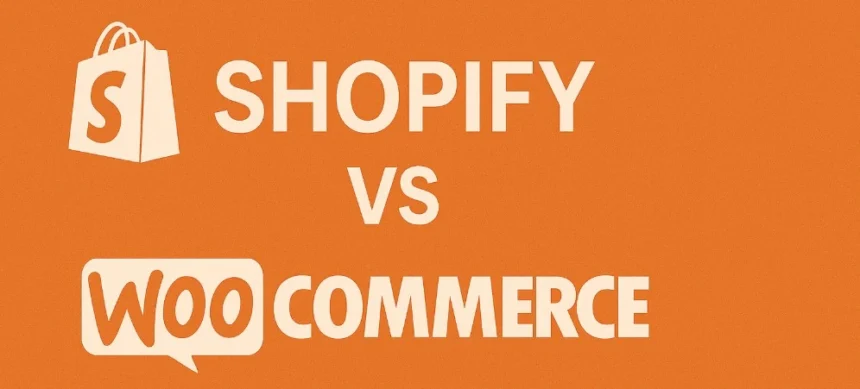
The landscape of enterprise e-commerce has shifted dramatically as we approach the 2026 fiscal year. For high-volume merchants and rapidly scaling brands, the debate between a managed SaaS environment and a self-hosted open-source framework is no longer just about preference. It is about financial efficiency, infrastructure resilience, and the Total Cost of Ownership (TCO). This comprehensive analysis dives deep into the financial realities of running Shopify Plus versus a robust, self-hosted WooCommerce architecture in the current market. We will dissect the hidden costs, the requisite infrastructure investments, and the human capital required to maintain these platforms at an enterprise level.
- The Strategic Infrastructure Investment
- Licensing Fees vs. Architecture Costs
- The Hidden Cost of Payment Processing
- Enterprise Development and Human Capital
- Integration and the ERP Factor
- Security, Compliance, and Risk Management
- B2B and Wholesale Operations
- Scalability and Global Performance
- The Total Cost of Ownership Calculation
- Conclusion: The Verdict for 2026
- Source Links and Further Reading
The Strategic Infrastructure Investment
Choosing an e-commerce platform in 2025 is equivalent to selecting the foundation for a skyscraper. The decision dictates your agility, your operational overhead, and your ability to handle the massive throughput required during Q4 peak seasons. While Shopify Plus offers a “business-in-a-box” model with a high monthly licensing fee, WooCommerce offers the allure of zero licensing costs but demands a significant investment in cloud architecture, DevOps, and security compliance.
We are seeing a trend where mid-market businesses generating between $5 million and $50 million in Gross Merchandise Volume (GMV) are re-evaluating their tech stacks. The primary driver is not just feature sets but the capitalization of stability. Downtime during a flash sale costs more than just lost revenue; it costs brand reputation. Therefore, when calculating TCO, we must factor in the cost of risk mitigation and high-availability engineering.
Licensing Fees vs. Architecture Costs
The most immediate differentiator is the pricing model. Shopify Plus has solidified its position as a premium SaaS provider. As of late 2025, the standard base pricing for Shopify Plus hovers around $2,500 USD per month for a one-year term, or approximately $2,300 USD per month if locked into a three-year contract. This fee covers the hosting, the CDN (Content Delivery Network), the checkout infrastructure, and the licensing.
However, for merchants processing high volumes, the variable platform fee becomes the critical metric. Once your monthly revenue exceeds a certain threshold (typically around $800,000 USD), the flat fee converts to a revenue-share model, often calculated at 0.25% of GMV. For a business generating $20 million annually, this licensing fee is a significant line item on the P&L statement, yet it provides cost certainty.
Contrast this with WooCommerce. The core software is free, but “free” is a misnomer in the enterprise space. To run WooCommerce at a scale comparable to Shopify Plus, you cannot rely on shared hosting. You require a dedicated cloud environment. Enterprise-grade managed WordPress hosting solutions from providers like Kinsta or WP Engine in 2025 range from $400 to over $1,500 per month depending on the number of PHP workers and bandwidth required.
If you opt for a custom AWS (Amazon Web Services) or Google Cloud architecture to ensure auto-scaling capabilities, your infrastructure costs usually start at $800 per month and can easily climb to $3,000 per month when you include RDS (Relational Database Service), Elastic Load Balancing, and high-performance Redis caching layers. The TCO calculation here must shift from “licensing” to “infrastructure leasing.”
The Hidden Cost of Payment Processing
In the high-stakes world of e-commerce, payment gateway fees are often the largest silent expense. Shopify Plus incentivizes the use of Shopify Payments. If you utilize their native processor, you generally pay competitive rates (around 2.15% + $0.30 per transaction for domestic US cards). However, if your business requires a specific third-party gateway like Authorize.net, Braintree, or a specialized high-risk processor, Shopify levies an additional 0.15% transaction fee on top of your gateway’s fees. This 0.15% might seem negligible, but on $10 million in revenue, that is $15,000 in pure platform fees annually.
WooCommerce offers absolute freedom here. You can integrate any payment gateway without paying a “penalty fee” to the platform. For merchants with negotiated interchange-plus pricing models or those using specific gateways like Stripe or PayPal Braintree, the savings can be substantial. If you can negotiate your processing fees down to 1.9% blended, you keep that margin. There is no platform tax on your transaction volume. For businesses with thin margins, such as electronics or B2B distributors, this 0.15% to 0.5% difference can fund an entire marketing department.
Enterprise Development and Human Capital
Hardware and software are expensive, but human expertise is the premium asset in 2025. The demand for specialized e-commerce developers has driven hourly rates to historic highs.
For Shopify Plus, you are typically hiring for front-end customization and app integration. The “Liquid” templating language is proprietary but widely understood. A senior Shopify developer or specialized agency in North America or Western Europe charges between $150 and $250 per hour. Because the backend is locked, you do not spend money on database maintenance, security patching, or server upgrades. Your development spend is focused entirely on User Experience (UX), Conversion Rate Optimization (CRO), and custom functionality.
WooCommerce demands a Full Stack approach. You are not just building a store; you are maintaining a software application. You need expertise in PHP, React (for modern block-based themes), MySQL database optimization, and Linux server administration. While general WordPress developers are abundant, enterprise-grade WooCommerce architects charge premium rates, often exceeding $200 per hour.
The hidden labor cost in WooCommerce is “maintenance.” A Shopify store does not require a developer to update the server operating system or patch a security vulnerability in the PHP version. A WooCommerce store does. If you do not have an internal DevOps engineer (average salary $120,000+ per year), you must retain an agency for a maintenance contract, which typically costs $2,000 to $5,000 per month for enterprise SLAs (Service Level Agreements).
Integration and the ERP Factor
Mature businesses run on data. The connection between your e-commerce storefront and your Enterprise Resource Planning (ERP) system is the nervous system of your operations.
Shopify Plus has invested heavily in its Global ERP Program, offering certified connectors for NetSuite, Microsoft Dynamics 365, Acumatica, and SAP Business One. These connectors are often plug-and-play to a degree, though they still require configuration. The cost here is usually a SaaS subscription for the connector middleware, ranging from $300 to $1,000 per month.
WooCommerce creates a different integration scenario. Being open-source, it has unlimited flexibility. You can build a custom API endpoint to feed data directly into a legacy on-premise ERP system that Shopify might reject. However, you bear the cost of building and maintaining that bridge. A custom ERP integration project for WooCommerce in 2025 typically requires a capital expenditure of $20,000 to $50,000 upfront, plus ongoing maintenance to ensure API compatibility when the ERP or WooCommerce core updates.
Security, Compliance, and Risk Management
Data breaches are the extinction events of the digital age. Security is a cost center that brings high ROI by preventing catastrophe.
Shopify Plus is a Level 1 PCI DSS compliant platform. This means the burden of compliance rests on Shopify. They handle the server security, the firewalls, the intrusion detection, and the SSL certificates. For a Merchant of Record, this offloads a massive liability. The “cost” is included in your monthly fee.
With Self-Hosted WooCommerce, the merchant assumes the liability. You are responsible for ensuring your hosting environment is PCI compliant. This often involves purchasing a dedicated firewall (WAF) service like Cloudflare Enterprise or Sucuri, which can cost $200 to $500 per month. You may also need to pay for annual third-party security audits and penetration testing, which can cost upwards of $10,000 per year. If you process payments on-site (Direct Post), the compliance burden is even higher. Most enterprise WooCommerce stores utilize tokenization gateways to mitigate this, but the server security remains your responsibility.
B2B and Wholesale Operations
The B2B e-commerce sector is projected to dwarf B2C sales by 2026. Shopify Plus has aggressively expanded its B2B feature set. Native B2B functionality now allows for company profiles, net payment terms, price lists, and easy reordering without third-party apps. This is included in the Plus license, offering immense value for hybrid merchants (selling B2C and B2B).
WooCommerce has long been a favorite for B2B due to the B2B King or Wholesale Suite plugins. These plugins are powerful and have a one-time cost or low annual fee (under $300). However, configuring complex tiered pricing, customer-specific catalogs, and requisition lists often requires heavy customization. While the software cost is lower, the configuration time is higher.
Scalability and Global Performance
Shopify Plus utilizes a massive global infrastructure. Their storefronts are rendered from edge nodes worldwide. You do not pay extra for CDNs or bandwidth. Whether you have 100 visitors or 100,000 concurrent users during a “drop,” the platform scales automatically.
WooCommerce scalability is manual. To handle 100,000 concurrent users, you need a load-balanced architecture. You need to pay for an enterprise CDN solution. You need robust database sharding or read-replicas. The cost of bandwidth is also a factor; hosting providers often charge overages for high traffic. A viral event on an under-provisioned WooCommerce site leads to a crash. Preventing that crash requires paying for “peak capacity” infrastructure 24/7/365, or sophisticated auto-scaling setups that are expensive to engineer.
The Total Cost of Ownership Calculation
When we aggregate these numbers over a 24-month period for the 2025-2026 cycle, the comparison creates a distinct profile for each platform.
Shopify Plus 2-Year Projection
The primary costs are the $60,000 USD base licensing (approximate), plus transaction fees. If you use third-party gateways, the 0.15% fee on $10M revenue is $15,000. App subscriptions for reviews, loyalty, and search (Algolia/Klevu) can add another $2,000 per month. The development retainer for a specialized agency might be $5,000 per month for ongoing optimization.
- Estimated 2-Year TCO: $200,000 to $300,000 (excluding internal staff).
- Value Proposition: Speed to market, reduced technical debt, stability.
WooCommerce Enterprise 2-Year Projection
Licensing is zero. Hosting at an enterprise level is roughly $1,500 per month ($36,000). Premium plugins and security suites cost around $5,000 annually ($10,000). The major cost is technical labor. You likely need a dedicated developer or a high-tier agency retainer of $10,000 per month to manage updates, security, and features ($240,000).
- Estimated 2-Year TCO: $250,000 to $350,000.
- Value Proposition: Data ownership, infinite customization, no transaction fees, higher margin potential on massive volume.
Conclusion: The Verdict for 2026
The decision between Shopify Plus and WooCommerce in 2025 is not about which software is “better.” It is a choice between two different business models.
Choose Shopify Plus if your organization values speed, marketing agility, and reduced IT overhead. It is the superior choice for brands that want to focus on product and brand storytelling rather than server architecture. The higher licensing fees are an insurance policy against technical failure.
Choose Self-Hosted WooCommerce if your business requires deep, non-standard integrations, if you are selling regulated products that Shopify restricts, or if you have an internal engineering culture that thrives on control. It is the platform for merchants who view their technology stack as a proprietary asset to be owned and optimized, not rented.
Ultimately, the most expensive platform is the one that limits your growth. Whether you allocate your budget to licensing fees or engineering salaries, the goal remains the same: a frictionless, high-velocity commerce experience that converts traffic into revenue.
Source Links and Further Reading
- Shopify Plus Pricing Documentation: Shopify.com/plus/pricing
- Kinsta Enterprise Hosting Plans: Kinsta.com/pricing
- WooCommerce Server Requirements: WooCommerce.com
- Stripe Enterprise Pricing: Stripe.com/enterprise